Zort
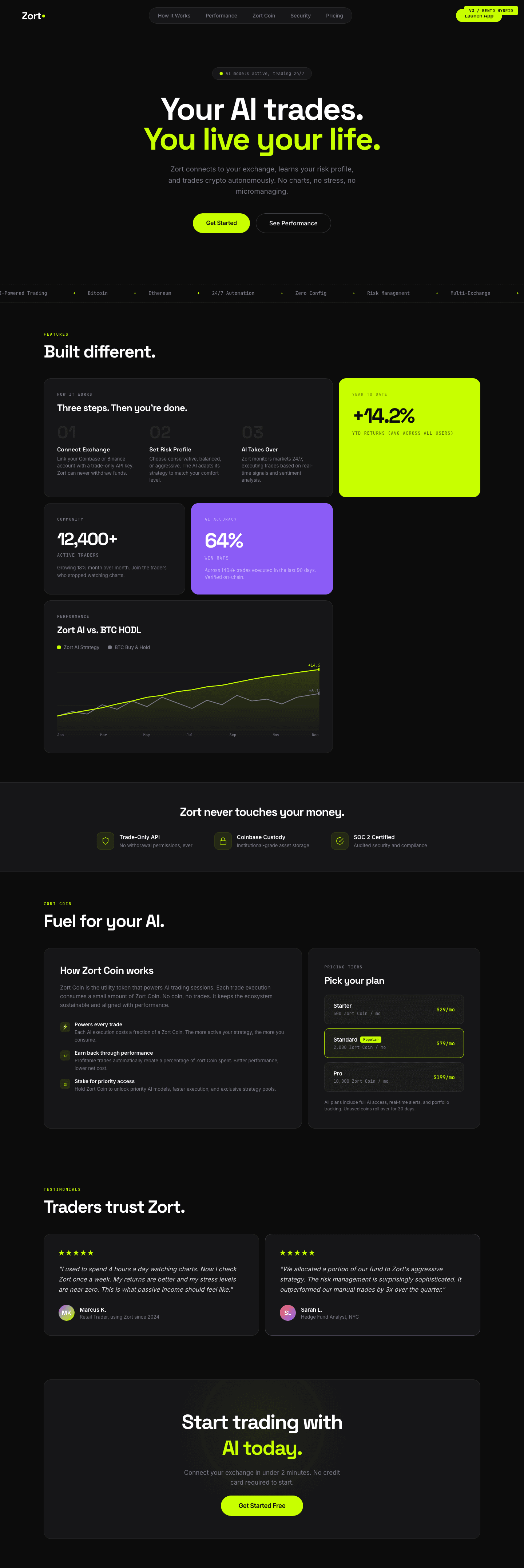
An AI-powered crypto trading platform that connects to Coinbase Pro and executes Bitcoin and Ethereum trades autonomously. I owned the full design process: user research, personas, information architecture, user flows, wireframes, and three distinct visual directions for both the marketing website and trading dashboard.
01The Challenge
Zort needed to serve two fundamentally different audiences with one product. Everyday investors (like Maya, 29, who bought $200 of Bitcoin once and never touched it again) need simplicity, plain English, and zero jargon. High-net-worth investors (like David, 47, VP of Operations with $40K in crypto) need performance data, risk metrics, and trade-level transparency. Every existing AI trading tool requires configuration: pick a strategy, set parameters, choose risk levels. Zort's differentiator was zero-config, but that raised a harder design problem: how do you build trust when the user has no control?
02Approach
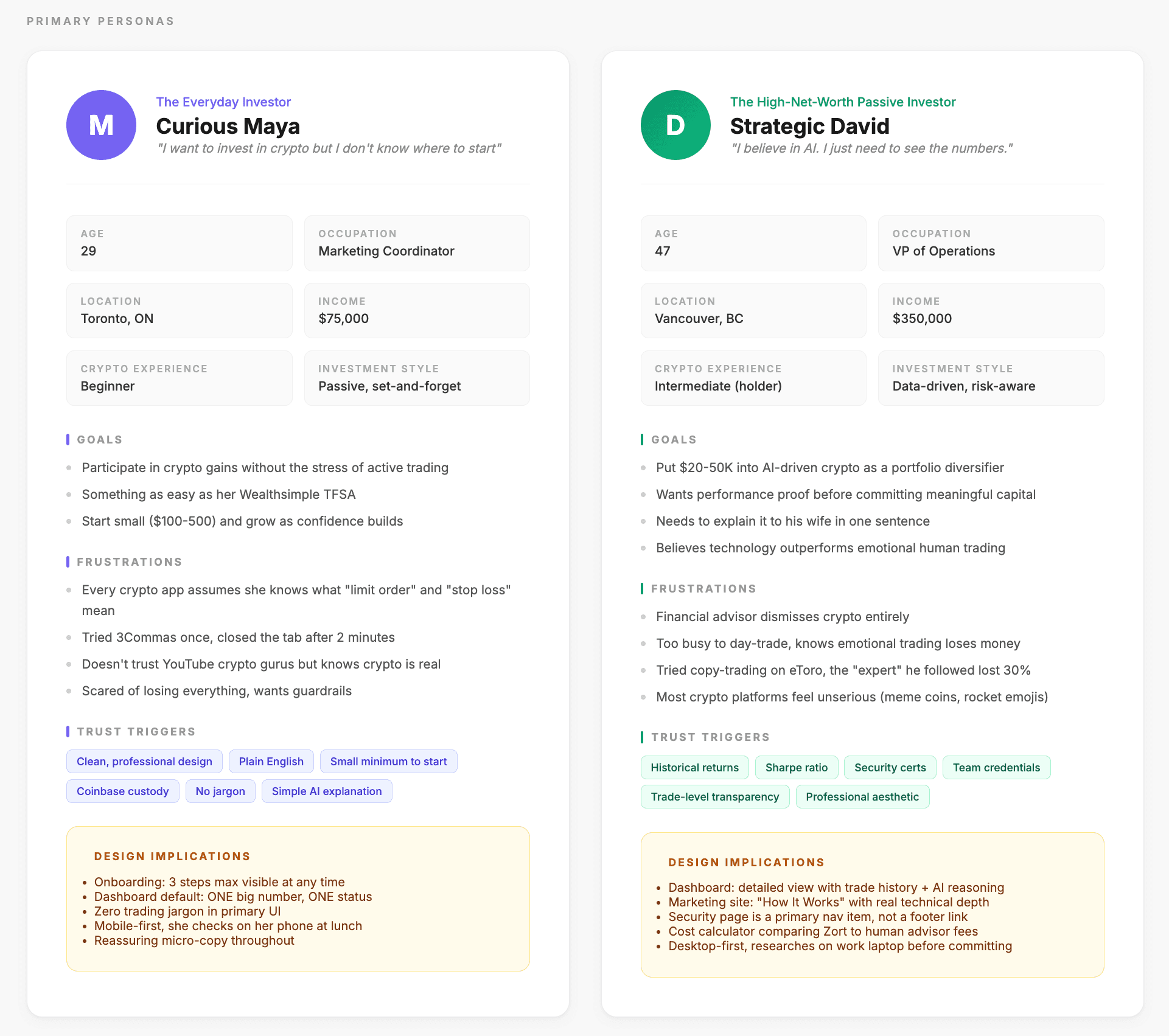
Research: two personas, one product
Built detailed personas for both audiences. Maya (everyday investor) needs onboarding in 3 steps, one big number on the dashboard, and reassuring microcopy. David (HNW investor) needs historical returns, Sharpe ratios, trade-level AI reasoning, and a security page he can read like a contract. The strategic decision: lead the marketing site with Maya, unlock depth for David.
5 user flows mapped end-to-end
Mapped every critical journey: new user onboarding (Maya's 3-step path), returning user performance check (simple vs. detailed toggle), skeptical visitor conversion (the trust funnel ending at the security page), HNW investor deep evaluation (Performance to Security to Pricing to About), and Zort Coin retention (personalized top-up with auto-refill).
Wireframes: 3 directions explored, 1 selected
Explored three homepage layouts: Product-First (rejected, shows UI before explaining value), Value-First Centered (selected, mirrors Maya's thought process), and Social Proof-First (rejected, small numbers backfire for new products). Then iterated section order on the winner, testing performance-before-process vs. process-before-performance.
3 website directions, each serving a different hypothesis
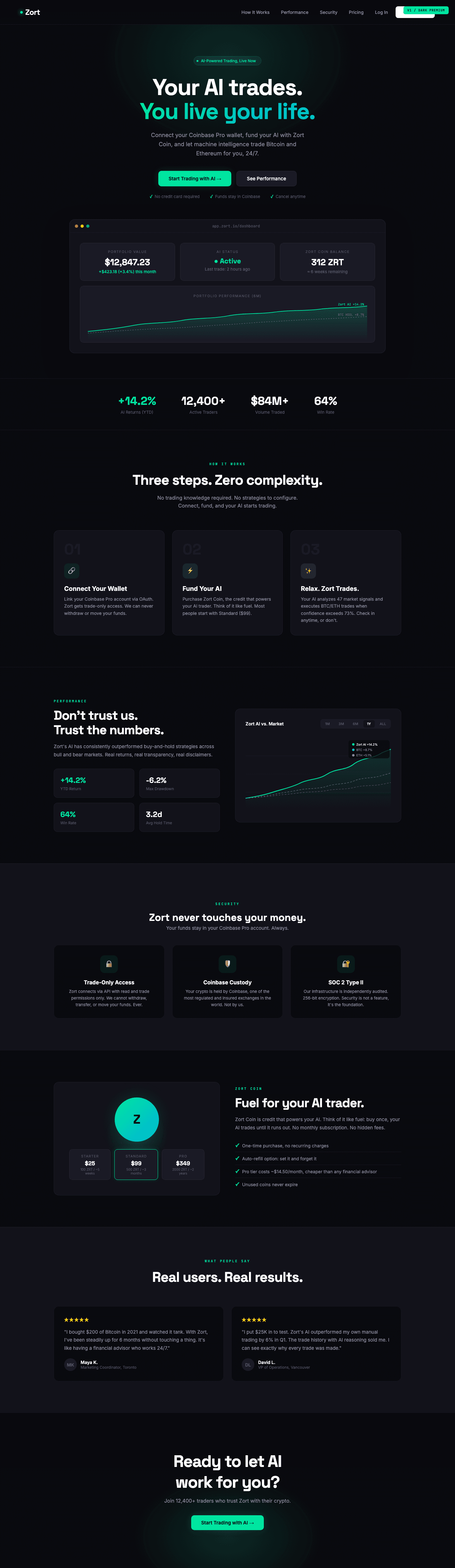
Dark Premium (crypto-native but refined), Light Clean (Wealthfront-level trust), and Bento Hybrid (bold, modern SaaS). Each tested a different assumption about what builds trust in a product that touches your money AND uses AI AND involves crypto.
3 dashboard directions, progressive disclosure in action
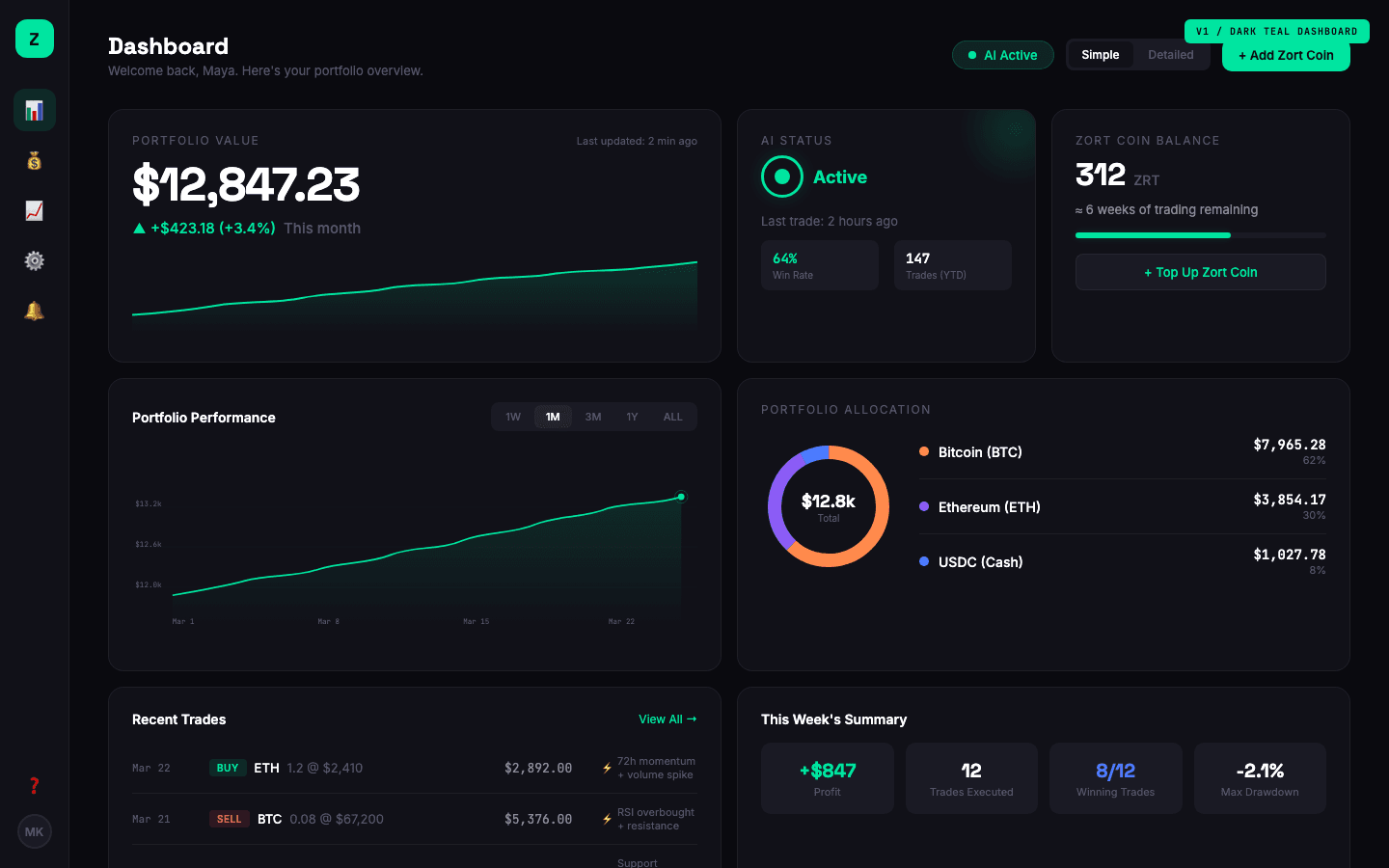
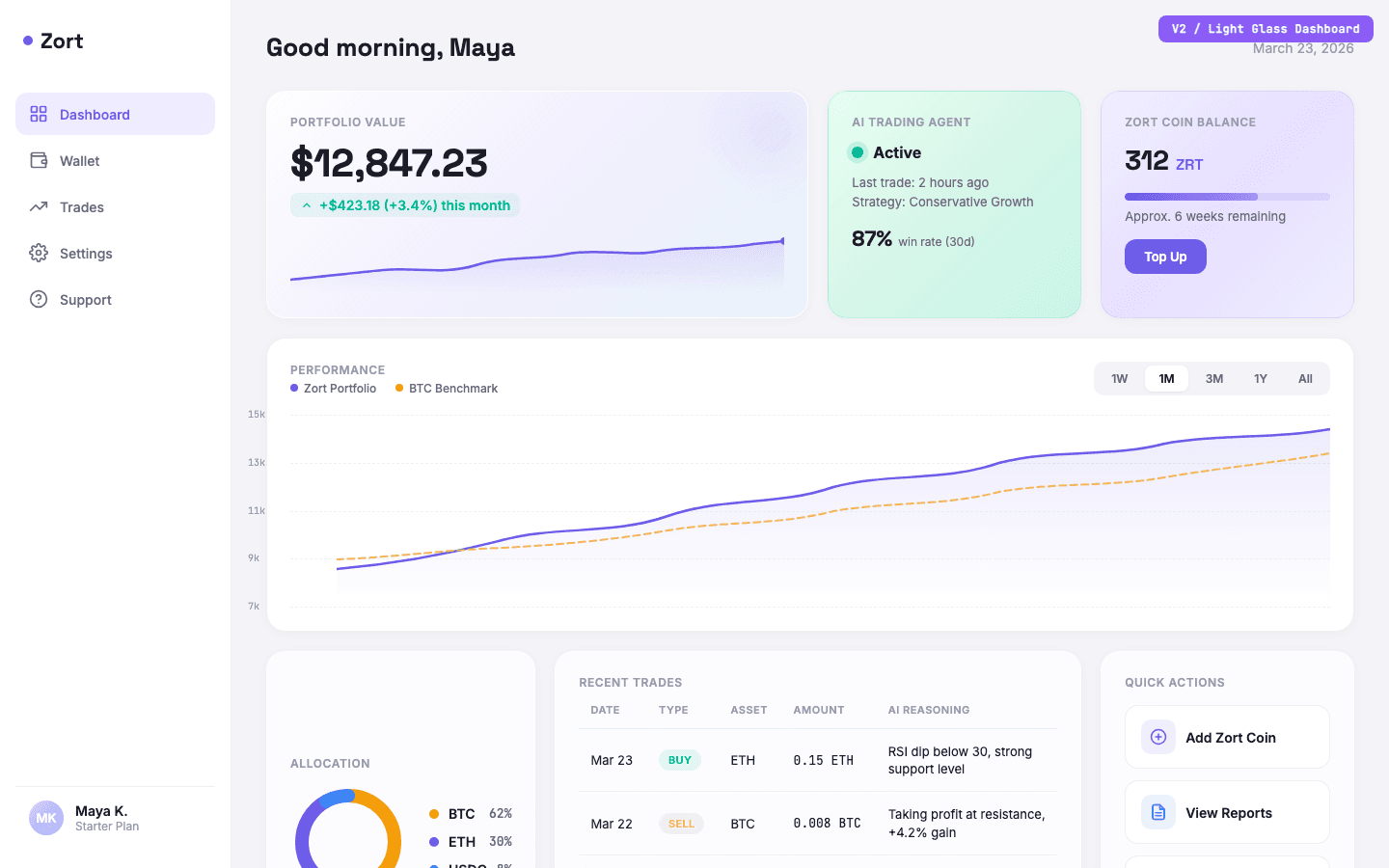
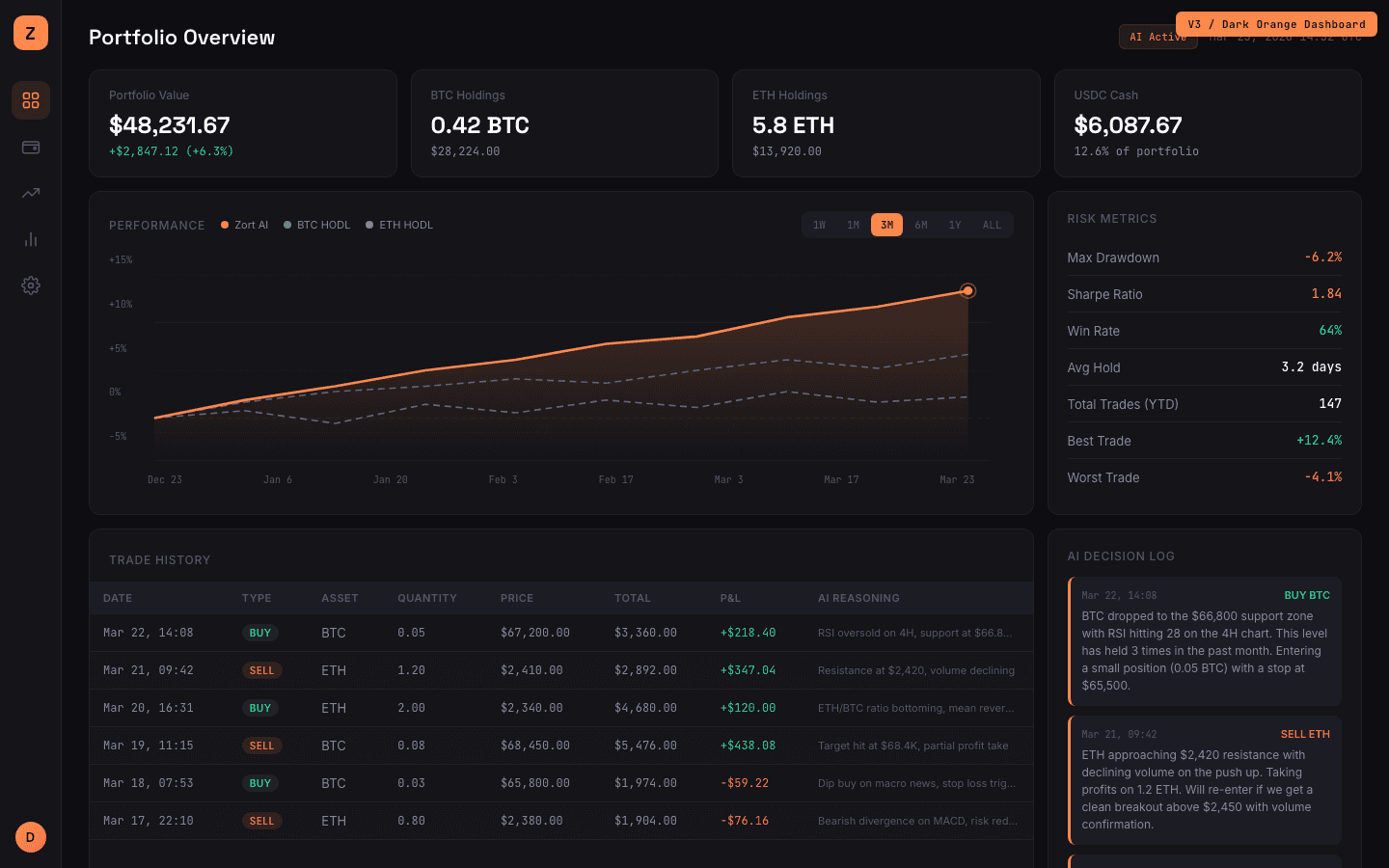
Dark Teal (balanced default with simple/detailed toggle), Light Glass (Maya's world, one number and one status), and Dark Orange (David's Bloomberg-meets-modern, every metric visible). The core pattern across all three: same data, different depths.
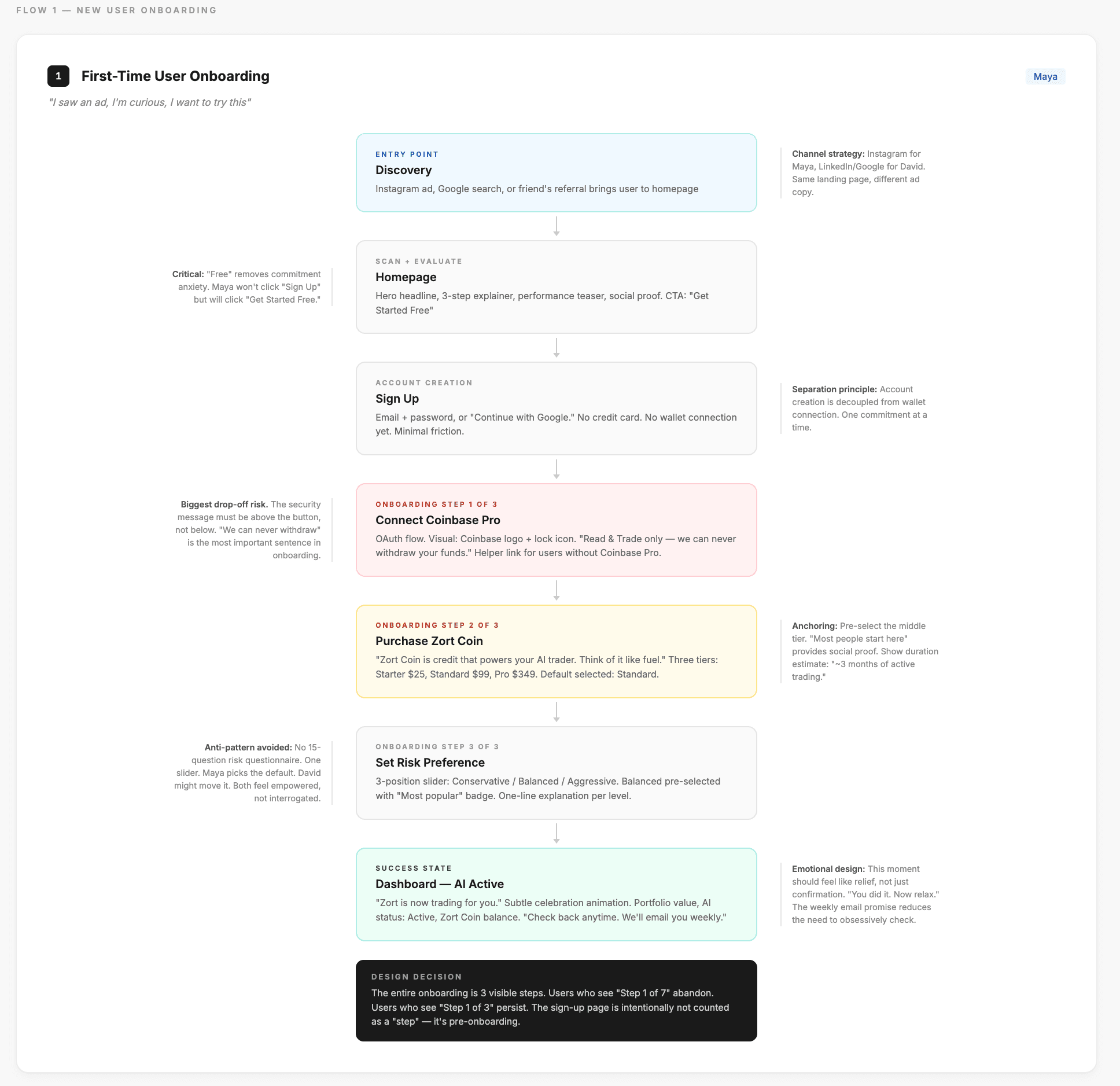
5 user flows: onboarding, returning user, skeptic conversion, HNW evaluation, retention
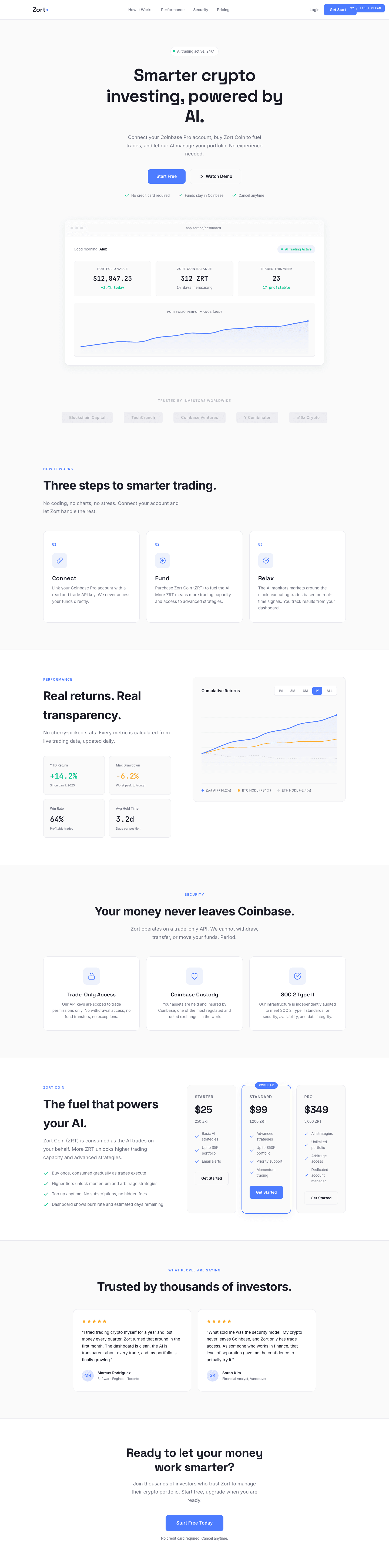
Explore the full Figma file with all website and dashboard mockups as editable design layers.
07Key Decisions
08Results
2
Personas Created
5
User Flows Mapped
3
Website Directions
3
Dashboard Directions
Desktop + Mobile
Responsive Designs
Full Process
Research to Hi-Fi
09Built With
10What I Learned
This project crystallized how I think about audience-first design. The instinct is to design for everyone, but 'everyone' means no one. The single most impactful decision was choosing Maya as the primary audience for the marketing site. That one call cascaded through every layout, every copy choice, every section order. David's needs didn't get ignored, they just got placed one click deeper. The other insight: trust is architecture, not decoration. The security page isn't a reassurance section, it's a conversion page. The custody diagram showing Zort only sends trade signals (never touches funds) did more for conversion than any hero headline could.
Interested in working together?
I design products that ship, and prove their value with real metrics.
Get in Touch